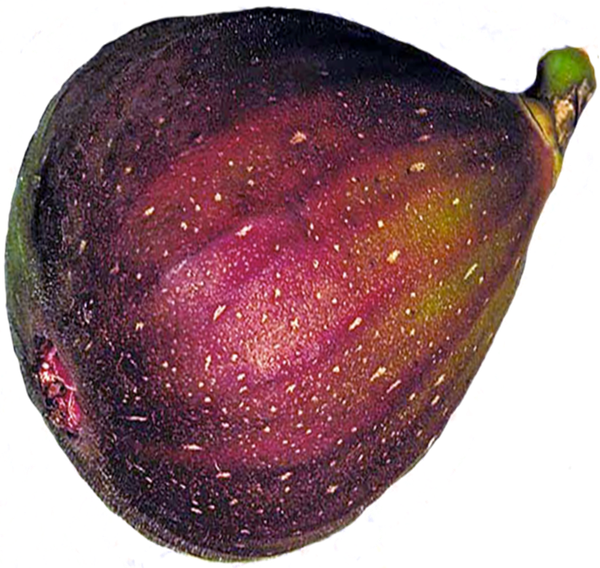
A tiny wasp is responsible! The fig tree cannot survive without the aid of this wasp, nor can the wasp survive without the fig tree! An amazing example of a
symbiotic relationship! In most cases, there is a specific species of wasp for each species of fig tree! Here’s basically the amazing story of how this works – Male and female wasps hatch inside a fig where they were originally deposited as eggs. The wasps feed on the fig. They mature quickly and mate. Now things must happen rapidly, because the life span of these wasps is very short! Both wasps immediately know their roles. The male has only two --
mating is the first. Now, he quickly accomplishes the second. He is flightless, but he does have sharp teeth. He uses these to bore a hole out of the fig. The pregnant female follows him out of the hole, gathering pollen as she does so. Once the male emerges, his two jobs are done! He quickly dies, but the female flies off looking for a fig that is receptive for pollination. She too is limited in time!
A fig is an inverted flower. In other words, the parts that need to be pollinated are actually inside, not outside as is the case with most flowers. This is why normal pollinators can’t see them. When the flowers inside the fig are ready for pollination, the fig releases certain chemicals, indicating that it is receptive. The wasp instinctively knows to follow the scent! She can’t see the flowers, either, but she knows exactly what she’s
doing!
At the base of the fig is a tiny, specialized hole that leads directly into the heart of the fruit. Without ever having learned of its existence, and never having done this before, the female wasp locates this tiny hole and starts climbing in. As she does so, she releases pollen right where it needs to be. The space inside the hole is very cramped, but she is perfectly designed to be able to angle her body through
the cavity. In various places on her body are sharp protrusions that aid her specifically as she wiggles her way deeper inside the fruit. However, the “climbing in” process also rips off her wings, so she is never able to leave the fig that she is now pollinating.
She has one more task – to lay her eggs. If she has climbed into a male fig, she will discover that the male flowers inside are perfectly designed for her
ovipositor, and so she lays her eggs there thus eventually growing new wasps that start the cycle all over again. The flowers inside a female (or “edible”) fig are different. The female flowers have parts that inhibit egg laying, so if the wasp enters one of these, she eventually dies without laying eggs, but having succeeded at pollinating the fig. So the fig tree winds up with male figs that are producing new wasps, and female figs that are producing new
seeds!
And the female wasp? Either way, she dies inside the fig, which digests her, providing nourishment for the fig. The pollinated female fig will now ripen and become appealing to various creatures that eat them and thus carry off the seeds to eventually become more fig trees!
And now you know why Fig Newtons crunch when you eat them! Ha! Seriously,
it's actually the seeds that do that.
“But now ask the beasts, and they will teach you; and the birds of the air, and they will tell you; or speak to the earth, and it will teach you….Who among all these does not know that the hand of the LORD has done this…? Job 12:7-9