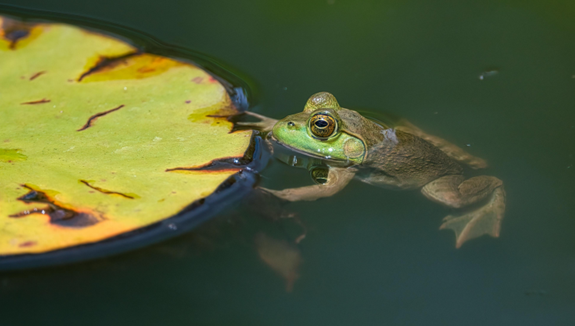
In our development, there are numerous ponds with diverse wildlife around them. Several months ago, we noticed the ponds beginning to dry up because of a lack of rain. The frogs were still there as long as there was water, even just a little bit. A few days
later, when we walked past one of the ponds, we noticed it was totally dry with no frogs. We were curious about what the frogs do when the pond dries up. Do they stay there somehow? Do they go somewhere else? If so, where do they go, and how do they know where to go? Or, do they simply die? I was intrigued, so I did a little bit of research and discovered that incredible aspect of design once again -- instinct!
When a pond dries up, frogs begin to react to environmental cues like humidity and dryness, moving towards dampness that they can smell, like perhaps another pond. Or they might seek shelter in other moist places, like under stones or rocks, or even into burrows made by other creatures.
Or.... and here's an amazing one!... they'll burrow deep into mud, up to two or three feet, and enter a type of hibernation state called estivation. In this state, since the ground at that depth is cooler, their metabolism slows down, which conserves water and energy. Some frogs can secrete a waxy substance that also helps to insulate them and retain moisture. They can maintain this state for up to several years! When dryness occurs while a frog is still in the tadpole
stage, it can be fatal. However, some tadpoles can wiggle into the mud and form "mud cocoons" while they wait for rain again.
Essentially, God provides for all these creatures through their instinctive actions that will help them survive until it rains again. This is why, when rain falls and the ponds have water in them once again, these creatures all
seem to instantly appear back in the pond!