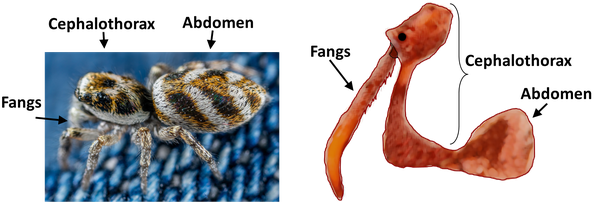
The pelican spider is also known as the assassin spider. That's because it sneaks up on its prey and waits for the opportune time to
strike! And, what is its prey? Exclusively, other spiders! Here's what it does...
As any spider walks, it lays a dragline. This dragline can be used to escape if the spider suddenly
needs to get away. The assassin spider will stalk through the leaves, and find the dragline of a spider. It will then follow that dragline carefully until it comes across the web the other spider built. The assassin will use its back six legs to move, while it gently uses the front two to feel the area, so it can get a good idea what's there. Once it locates prey, it can wait patiently. Once it pounces, though, there's no way out for the victim. The pelican spider can hold it away from its own
body, so it can't be part of a counter-attack. The pelican spider will pull one fang out, and let the victim hanging by the other until it dies! A pretty picture, huh?
More strange
than the spider itself is the "history" that has been assigned to it. Evolutionists claim that these spiders existed 165 million years ago. How do they "know" that? Because specimens, appearing exactly the same as they do today, are found in amber that they claim is 50 million years old. (That makes sense, right? 50 million = 165 million?) How do they "know" that the amber is that old? They DON'T! It's pure guesswork. Amber is simply hardened sap, and it can harden in MUCH less time than
that!
So, forget the false story the evolutionists tell, and watch an animation of the true story of how the spiders function...