Hi ,
Many years ago, when my dad was flying his airplane as an
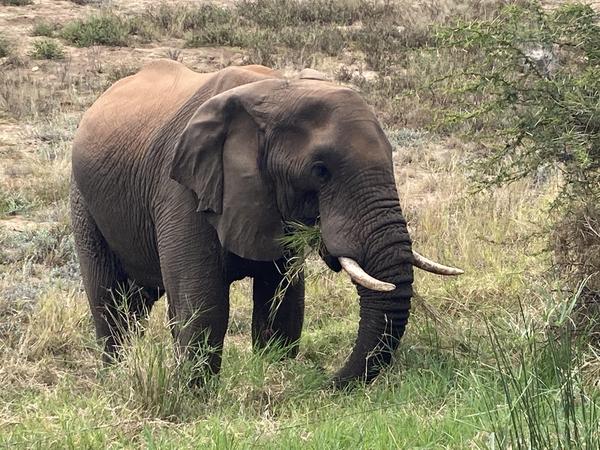
airborne ambulance in Zululand, South Africa, he would sometimes have to fly down to the “low veld” areas to bring back people wounded by elephants. In most cases (in fact, probably in all cases) the elephant attacked the human because it was provoked. But who, in their right mind, would disturb, provoke, or anger an elephant?! I mean, it’s not like you could win a battle with one.
Typically, it was because the elephant was eating crops in the people’s fields. For starters, it was very difficult for people to clear the fields, prepare the ground, plant the crops, and then tend to them because it was all done by hand. Then, the crop was their main food source the rest of the year. An elephant can eat 300 pounds of food in a day! Imagine a whole herd! Just imagine the damage! So, people would often
try to get the elephant/s out with whatever they had, usually just sticks.
We just met a man in South Africa who specializes in land management of all kinds. He told us of an amazing, natural way that people are keeping elephants out of their fields now. And, this method is not only being used in Africa, but India, too.
Along the perimeter of the fields, perhaps nestled in the natural branches used as fences, bee hives are being installed. And, even if the bees aren't being used to obtain honey, their value is incredible if elephants live nearby. The reason is that elephants hate bees! As soon as an elephant disturbs the area where the bees are, they come swarming out. Now,
bees can't really hurt an elephant at all, but elephants are particularly sensitive around their eyes and the end of their trunks. The angered bees just swarm and sting where they can. The elephants learn very quickly that the sound of swarming bees will soon lead to painful stings in these sensitive areas! So, they beat a hasty retreat.
An
amazing natural repellant. A tiny insect being used to control the largest land animal! Now, if I could just find a practical use for the yellow jackets that live near us!...